What this guide solves
This guide helps you decide where to stay, which areas to visit each day, when to book the key sights, and how to move around Rome without wasting time crossing the city unnecessarily.
Why visit Rome: what good trips do differently
Rome does not make much sense if you treat it like a list of separate monuments. The city works in layers: imperial Rome around the Colosseum and the Roman Forum, baroque Rome between the Pantheon, Trevi and Piazza Navona, and a more everyday Rome in neighbourhoods such as Monti, Trastevere, Prati or Testaccio. That is why a useful guide does not just tell you what to see, but also in what order to do it, where to stay so you can walk more, and which areas to reserve for each part of the day. That logic saves energy and turns a short break into a more comfortable trip.
The best first-time experience of Rome is usually in spring and autumn, when you can walk more without the extreme summer heat. April, May, September and October usually work very well for alternating museums, squares and food without making the itinerary feel like a race. There is also a practical advantage: in those months it is easier to sit down for a drink in the centre, go into a church without feeling rushed and finish the day in a trattoria without being exhausted. If you travel in summer, it is even more important to group neighbourhoods by proximity and leave more time for breaks, water and shade.
Rome also requires some concrete accommodation decisions. Staying in the Centro Storico puts you close to much of the trip on foot, but it is usually more expensive and busier. Monti works very well if you want to combine the Colosseum, Termini and the historic centre. Prati is a very orderly base for the Vatican, while Trastevere adds nightlife and a very recognisable neighbourhood feel. Paffing does not replace bookings or official checks, but it does help you turn all of that into a sensible plan: fewer unnecessary transfers, more useful time and a more human pace.
Rome neighbourhoods: where to stay and what to see in each area
Rome is best enjoyed if you think in zones. That way you can stay close to what interests you most, group visits together and leave the longer journeys for specific moments.
Centro Storico — the most walkable Rome
If it is your first time, the Centro Storico puts you close to Piazza Navona, the Pantheon, the Trevi Fountain, Campo de' Fiori and streets that are perfect for wandering without a rigid map. It is the classic area for combining landmarks with gelato, coffee and small stops between squares. It is also very useful for a short trip because it keeps transfers to a minimum. Prices are usually higher, so it is worth it if you value stepping out of the hotel and starting to walk almost immediately.
Trastevere — local atmosphere, food and nightlife
Trastevere mixes cobbled streets, trattorias, terraces and a more bohemian atmosphere. It is perfect for a relaxed dinner, an evening walk and experiencing a Rome that feels less monumental and more neighbourhood-based. From here you can easily cross into the historic centre or head down towards the Tiber and the Isola Tiberina area. Bear in mind that some streets are uneven and can be less convenient with heavy luggage, but for a trip focused on nightlife and food it usually works very well.
Monti — a creative base between the Colosseum and Termini
Monti is a very practical area for linking the Colosseum, the Esquiline Hill and Termini station without giving up cafés, small shops and a neighbourhood feel with personality. It is a good base if you want to walk a lot and return to the hotel without detours. It also makes it easy to combine an imperial-day itinerary with a more central one. Many people choose it for balance: it is still close to everything, but feels a little less touristy than the most classic heart of the centre.
Prati and the Vatican — comfortable, orderly and well connected
If your trip revolves around the Vatican, Prati is a very comfortable base. It keeps you close to St Peter's, the Vatican Museums and wider, more predictable avenues than other central areas. It also works well if you prefer accommodation that feels more orderly and well connected. From here you can enter the Vatican early, come back to rest and then continue on to Castel Sant'Angelo or the centre without crossing the city several times. It is a very sensible option for slower trips or for anyone prioritising logistics.
Rome itinerary by day: how to structure the visit
Rome gets much better when you divide it by areas. That way one day can focus on ancient Rome, another on the Vatican and another on neighbourhoods with more everyday life.
Paffing adapts this structure to your pace, your starting point and the way you like to travel. If you prefer more museums, more food or a slower walk, the areas can be rearranged so the itinerary has fewer jumps and more coherence. The goal is not to fit everything in, but to build a trip you can follow without checking the clock every hour.
What to see in Rome: essential places
Rome has too many must-sees to treat them all the same. Here are the ones that work best on a first visit and also fit well by area.
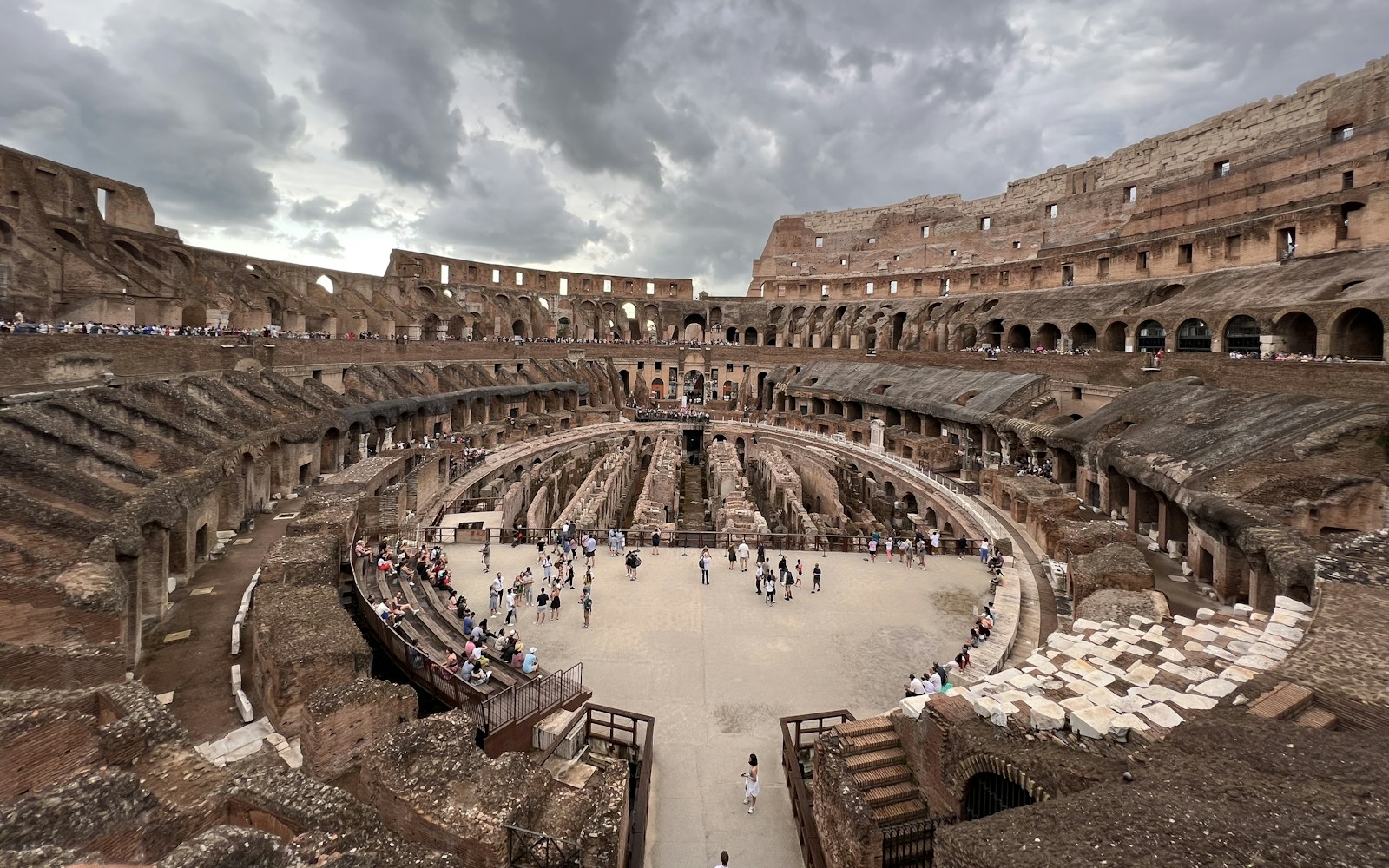
Colosseum
It is Rome's most recognisable postcard view and a visit that is worth placing at the start of the trip. Ideally you should book ahead, especially in high season, because the most convenient time slots disappear first. It is worth combining it with the Roman Forum and the Palatine Hill to better understand ancient Rome. If you can, go in early and then leave time to walk through Monti or the Forum area at a relaxed pace.
Roman Forum and Palatine Hill
These two spaces truly complete the Colosseum visit because they show what the political and ceremonial heart of imperial Rome looked like. They should not be treated as a quick add-on; they need time and a bit of energy. Visiting early or in one unhurried block works better than trying to see them on the way past. If you are interested in history, this is where Rome stops being a set of monuments and becomes a city you can read layer by layer.
Vatican Museums and Sistine Chapel
It is one of the most in-demand visits in the city and one of the ones that requires the most planning. It is worth booking well in advance if you are travelling during busy periods. The route is long, with many rooms and a lot of visitors, so do not combine it with too many other things on the same day. The most practical approach is to arrive with a buffer, assume it will take a large part of the morning and then walk out towards St Peter's or Castel Sant'Angelo.
St Peter's Basilica
The basilica impresses through its scale, heritage and the contrast with the square. It can be visited after the Vatican Museums or as a separate block if you prefer a lighter day. The most useful advice is to arrive with time to spare and check access carefully in high season, because security checks and queues can change the experience quite a lot. If you are interested in religious art or architecture, there is enough here to justify a long stop.
Pantheon
The Pantheon is an almost obligatory stop because of how well preserved it is and because it fits so nicely between the other squares in the centre. It is especially enjoyable when you include it in a walking route through the Centro Storico. If you arrive at peak times, the square can be very lively; that is why many people prefer to see it early or at the end of the day. It is one of those places where Rome makes sense without long explanations.
Trevi Fountain and Piazza Navona
Trevi and Piazza Navona work very well together on a route through the historic centre. The Trevi Fountain is especially photogenic, but also very crowded, so it is worth going there early or in the evening. Piazza Navona, by contrast, gives you a more open, baroque pause, ideal for sitting for a moment, taking in the surroundings and then continuing on to nearby streets. They are two stops that explain why Rome is also enjoyed between walking moments.
Practical information for travelling to Rome
| Aspect | Details |
|---|---|
| Best time | April–May and September–October: milder weather, more pleasant walks and less feeling of being overwhelmed than in the height of summer. |
| How to get there | From Spain there are direct flights to Fiumicino and also low-cost options to Ciampino. Fiumicino connects to Termini via the Leonardo Express; Ciampino usually requires a shuttle bus or a combination with urban transport. |
| Local transport | Metro, buses, trams and lots of walking. The centre is very walkable, but for the Vatican, Termini or Testaccio it is usually better to combine walking stretches with metro or bus. |
| Average budget | Budget: €70–120 per day; mid-range: €130–250; comfort: €250 or more. The total depends mostly on the hotel, entrance tickets and how much you use transport instead of walking. |
| Language and tips | Basic Italian helps, but in tourist areas simple English is usually enough. Book the most in-demand visits in advance and leave room for queues, breaks and schedule changes. |
| Recommended days | 3 days for the essentials; 4 or 5 days for a comfortable trip with the Vatican, the historic centre and neighbourhoods; 6 days or more if you want to add museums, food and a slower route. |
If you want this structure adapted to your dates, your budget and the way you move around, Paffing can reorganise neighbourhoods, priorities and timings so the trip fits your profile better. The advantage is not only deciding what to see, but deciding what to leave out so the trip feels more realistic.
Recommended internal links
Start with a personalised preview
Enter destination, dates, departure, return, travellers, transport and interests to generate an initial guide structure with PAFFING.
Frequently asked questions
How many days do you need to visit Rome?
With 3 days you can see the classic core — Colosseum, Roman Forum, Palatine Hill, Pantheon, Trevi Fountain and Piazza Navona —, but the trip is quite compact. If you add a 4th day, you can reserve half a day for the Vatican and another block for neighbourhoods like Monti or Trastevere without rushing. For a first trip, 4 days is usually the most comfortable point if you want to walk, stop for lunch and not stack visits without breaks.
What is the best area to stay in Rome?
For a first visit, Centro Storico and Monti are usually the most practical bases because they reduce transfers and let you do a lot on foot. If the Vatican is your priority, Prati works very well because of the layout and connection to St Peter's. Trastevere is ideal if you want nightlife and restaurants, although you should expect cobblestones and more noise at dusk. The best area depends on whether you prioritise wandering, logistics or neighbourhood life.
Do you need to book the Colosseum and the Vatican Museums in advance?
Yes, especially in spring, summer, holidays and weekends. The Colosseum, Roman Forum and Palatine Hill are usually better with reserved entry to avoid queues and choose a less crowded time slot. At the Vatican, the Vatican Museums and the Sistine Chapel are even more sensitive to demand, so booking in advance helps a lot to avoid losing half the morning. Paffing can organise the route; availability should always be confirmed with official sources.
Can you walk around Rome or do you need public transport?
Rome is very walkable in the historic centre, especially if you stay between Centro Storico, Monti or Trastevere. Still, the metro, buses and an occasional tram save energy for longer stretches, like going to the Vatican or returning from Testaccio to the hotel. The most comfortable strategy is usually to mix short walks with targeted transport; that way you avoid losing time and arrive with more energy in the areas where strolling matters most.
How do you get from Fiumicino airport to Rome centre?
The most direct option is usually the Leonardo Express, which connects Fiumicino with Termini in about 30–35 minutes without intermediate stops. There are also shuttle buses and combined alternatives with regional train or taxi, but the best choice depends on your hotel and arrival time. If you are travelling with a lot of luggage, it is worth checking the trip to your accommodation door before you buy the ticket.
Is Rome expensive to travel?
Rome can fit different budgets, but the cost changes a lot depending on accommodation, entries and travel pace. Eating in simple trattorias, walking a lot and booking well can keep spending reasonable; by contrast, staying in Centro Storico, visiting several museums and dining in very popular areas quickly raises the total. As a practical reference, a budget break and a comfortable version are not even close in price.
What is the best time to travel to Rome?
April-June and September-October usually give the best balance between temperature, light and pleasant walks. In July and August Rome can be quite hard because of the heat and tourist crowds, so it is wise to leave early and reserve midday for rest. In winter there are fewer people and more room to improvise, although days are shorter and some visits feel better with a less packed itinerary.