What this guide solves
This guide helps you turn Japan into a realistic route: which bases to choose, which neighborhoods and cities to prioritize, what to see in limited time, and how to fit trains, temples, and day trips together without improvising every day.
Why visit Japan: what makes a well-planned trip different
Japan is one of those destinations that seem easy to sum up and very hard to organize well. It has an excellent rail network, huge cities, neighborhoods with very distinct identities, temples and shrines living alongside futuristic avenues, and mountain or coastal day trips that fit into the same itinerary. That is why a simple list of places is not enough. What really makes the difference is choosing which base to use, how many hotel changes to accept, and what pace suits you.
On a first visit, Tokyo usually works as the gateway thanks to its variety of neighborhoods and connections, Kyoto provides the more classic and restrained part of the trip, and Osaka adds urban energy, food, and very good connections for continuing around Kansai. In between you can add Nara, Hakone, Hiroshima, or Miyajima depending on the time available. That combination makes Japan very rewarding for curious travelers, but also very easy to overload if you try to see everything in a few days.
The best season depends on what you want. Spring and autumn offer the most pleasant weather for walking and linking visits, but they also draw bigger crowds. If you want to avoid the busiest periods, it helps to think in shoulder weeks, early starts at famous temples, and a route that does not force you to cross the country every morning. That is exactly where Paffing helps: it balances excitement, logistics, and rest.
Where to stay in Japan: the best bases for a first route
If your trip includes several cities, the place you stay matters almost as much as the sights. In Japan, it pays to sleep near well-connected stations or in neighborhoods where you can walk out to dinner, have an early breakfast, and return without long transfers. The goal is not to pick the most famous district, but the base that saves you time every day.
Shinjuku, Tokyo — the main transport hub
Shinjuku is a very practical base for a first stay in Tokyo because it concentrates trains, the subway, hotels at every level, and nightlife. From here you can move easily to Shibuya, Harajuku, or Tokyo Station, and you can also stroll through Omoide Yokocho, Kabukicho, or the Metropolitan Government Building observation deck. If you want a mix of convenience, transport, and urban atmosphere, it is usually a safe bet.
Asakusa and Ueno, Tokyo — tradition, museums, and a slower pace
Asakusa and Ueno work very well if you prefer a Tokyo that is easier to walk and a little less intense at night. In Asakusa you have Senso-ji and Nakamise Street; in Ueno, the park, museums, and excellent connections to other parts of the city. It is an attractive base for travelers who want more temples, markets, and traditional neighborhoods without giving up good links to the rest of the capital.
Gion and Higashiyama, Kyoto — temples, alleys, and a classic atmosphere
If Kyoto is a priority, staying in Gion or Higashiyama makes it much easier to get up early for Kiyomizu-dera, the Yasaka Shrine area, or the wooden streets that make this part of the city so recognizable. The area is quieter at the end of the day, which helps you enjoy Kyoto when the tour groups and the heat return. It is an ideal base for a more immersive stay.
Namba and Umeda, Osaka — food, shopping, and quick connections
Osaka is a very comfortable base because it combines good hotel options, highly functional stations, and a food scene that feels more relaxed than Tokyo’s. Namba puts you close to Dotonbori and Kuromon Market; Umeda is better for moving around Kansai and linking to Kyoto or Nara. If you want to end the trip in a city that is practical for eating, going out, and arranging day trips, Osaka fits very well.
Japan in 3 days: how to structure a first visit
Three days are not enough to see Japan in depth, but they can be enough to understand the basic logic of an itinerary if your trip is very short or if you only want a first overview. In this example we group cities and neighborhoods by area, so the visit makes sense and does not turn into a race of trains and suitcases.
If you have more days, the route gets much better when you slow down. Adding Nara, Hakone, or Hiroshima lets you spread the transfers out, sleep two nights in a row in each base, and enjoy Japan more without cramming everything into three days. That is exactly what Paffing structures: an itinerary that sounds good on paper and actually works when you are on the train with a backpack and a suitcase.
What to see in Japan: must-see places for a first route
For a first trip, it helps to mix famous icons with places where you can feel everyday life. That way the trip is not reduced to famous temples and observation towers: it also includes shopping streets, key stations, markets, and day trips that show other layers of Japan.
Shibuya and Meiji Jingu
Shibuya gives you Tokyo’s most recognizable urban scene, but the interesting part is pairing it with a walk around the neighborhood and with Meiji Jingu, a shrine surrounded by forest that contrasts sharply with the station and the nearby avenues. If you go up to a viewpoint like Shibuya Sky or another observation deck in the area, it is worth booking a time slot when possible and arriving with some margin.
Senso-ji and Asakusa
Asakusa is one of the best places to begin understanding the more classic side of Japan within Tokyo. Senso-ji Temple, Kaminarimon Gate, and Nakamise Street create a very recognizable ensemble that is easy to walk and full of places to eat or buy snacks. Arriving early makes a big difference because the neighborhood still keeps a calmer rhythm before the crowds arrive.
Fushimi Inari and Kiyomizu-dera
In Kyoto, Fushimi Inari is hugely popular for its red torii gates and for the chance to walk at your own pace, but that is precisely why it is worth going early. After that, Kiyomizu-dera and the Higashiyama area take you to a more photogenic and historic side of the city, with hills, traditional shops, and alleys that work very well late in the morning or at sunset.
Dotonbori and Kuromon Market
Osaka works very well when you see it as a city for eating and wandering without rushing. Dotonbori brings together neon signs, canals, nightlife, and a very different feel from Kyoto; Kuromon Market, meanwhile, helps you understand the everyday side of local food. If you only have one afternoon in Osaka, this combination gives you a good sense of the city’s character.
Nara Park and Todai-ji
Nara fits nicely as a day trip from Kyoto or Osaka. Nara Park, with the deer, and Todai-ji, one of the best-known temples in the area, offer a very different visit from the big cities. It is a good stop to slow the pace in the middle of a busy route, but it is worth taking your time, respecting the animals, and not treating it like a quick hop between two trains.
Hakone, Lake Ashi, and the Fuji area
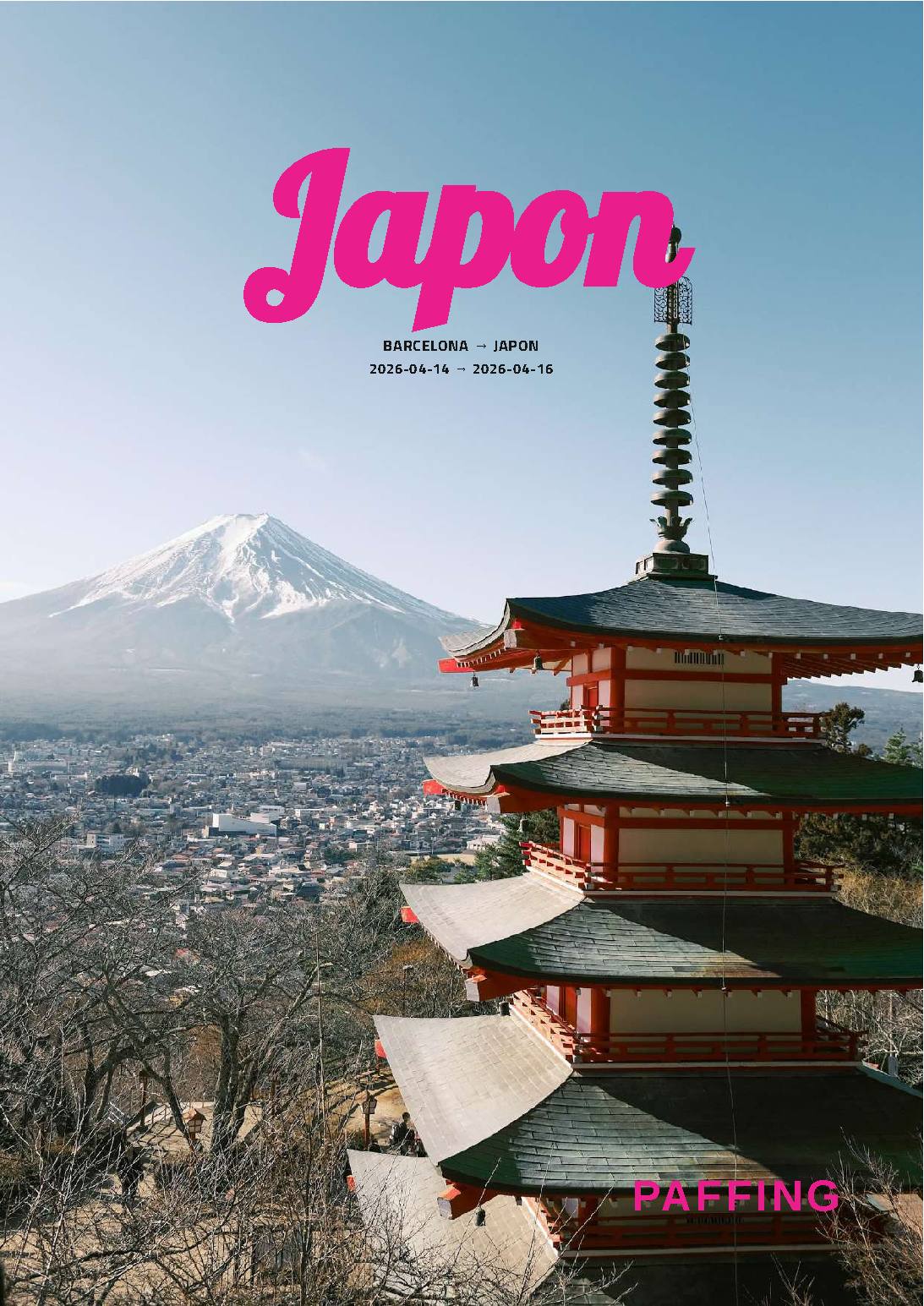
If you want a break between Tokyo and Kyoto, Hakone is one of the most useful escapes because it combines onsen, ropeways, views of Lake Ashi, and, if the weather cooperates, panoramas of Mount Fuji. You will not always get perfect visibility, so it is worth checking the forecast and not obsessing over a single photo. This is an excursion that works best when you treat it as a scenic pause rather than a checklist.
Practical information for traveling to Japan
| Aspect | Details |
|---|---|
| Best time | Spring and autumn are usually the most comfortable windows: March-April for the cherry blossoms and October-November for the mild weather and seasonal colors. If you can, avoid peaks like Golden Week, Obon, and New Year so you have more room to move. |
| How to get there | From Spain, the most common option is flying to Tokyo or Kansai, sometimes with a layover in Doha, Dubai, Istanbul, or Helsinki, although some direct routes appear in certain seasons. Narita, Haneda, and Kansai are very common entry points; from there, the express train or the Shinkansen handles the first leg. |
| Local transport | IC cards like Suica, Pasmo, or ICOCA make day-to-day travel much easier. In Tokyo, the JR Yamanote Line and the subway network cover the main districts very well; in Kyoto it is worth checking each transfer carefully because buses can be slower; in Osaka, the subway and commuter trains run very frequently. |
| Average budget | As a broad reference, a budget-conscious trip can be around 10,000-15,000 yen per day excluding the international flight, while a comfortable plan usually goes up quite a bit once you add central hotels, better meals, and long rides on fast trains. The city and how early you book can change the final number a lot. |
| Language and tips | Large stations and tourist areas usually have English signage, but do not assume everything will be translated. Bring some cash, an eSIM or data card, and use Google Maps to connect trains and platforms. In Japan, order matters a lot, so respecting queues and schedules saves you trouble. |
| Recommended days | The sensible range for a first route is usually 7-10 days if you want to see Tokyo, Kyoto, and Osaka at a relaxed pace. With 12-14 days you can add Nara, Hakone, Hiroshima, or Miyajima and sleep more nights in each base. Less than a week forces you to cut a lot from the map. |
What Paffing does differently from a blog or an agency
Before the FAQs, it is worth being clear about what this tool does and does not do. Paffing does not replace official checks or bookings, but it does organize the information so the route has logic and fits your dates, your interests, and the way you travel.
| Option | What it’s for | Typical limit | Best if... |
|---|---|---|---|
| Travel blog | Get inspired and learn about areas in Japan. | Does not adapt the route to dates, departure, return, or real pace. | You are in the research phase. |
| Traditional agency | Delegate bookings or specific services. | Can be less flexible for very personal interests. | You want operational support with bookings. |
| Paffing | Create a personalized guide by areas, days, transfers, and interests. | Does not replace official checks or bookings. | You want to organize the route before and during the trip. |
Start your Japan guide with a personalized preview
If you already know Japan is your next trip, the next step is not to save more tabs: it is to decide on a route that makes sense for your real days, your priorities, and your way of moving around. Paffing helps you go from inspiration to a usable structure.
Frequently asked questions
How many days do I need for my first trip to Japan?
For a first trip, the most sensible range is usually 7 to 10 days if you want to combine Tokyo, Kyoto, and Osaka without rushing. With 3 or 4 days you only see a very small part of the country; with 2 weeks you can add Nara, Hakone, or Hiroshima and slow the pace. Paffing helps you decide what fits and what is better saved for another trip.
What is the best time of year to travel to Japan?
The most comfortable windows are usually spring and autumn: March to April for the cherry blossoms and October to November for the mild weather and seasonal colors. If you prefer fewer crowds, it is wise to avoid peaks like Golden Week, Obon, and New Year. The exact best dates depend on the area, so for a longer trip it is worth checking the weather for each base.
Is the JR Pass worth it for traveling from Tokyo to Kyoto and Osaka?
It depends on your route. If you only do the Tokyo-Kyoto-Osaka corridor once, it is often worth comparing the pass with individual tickets because rules and prices change often. If you are linking several long legs or adding cities like Hiroshima, it can make sense. The important thing is to calculate your real itinerary first, not buy the pass before the route is set.
How do I get around between Tokyo, Kyoto, and Osaka?
The most convenient way is usually the Tokaido Shinkansen. Tokyo-Kyoto and Tokyo-Osaka take only a few hours, and Kyoto-Osaka is a short trip you can also do on local trains. Within the cities, IC cards like Suica, Pasmo, or ICOCA work very well. In Kyoto, it is worth checking each transfer because buses can be slower during peak hours.
Is Japan safe to visit?
Yes, Japan is usually considered a very safe destination for travelers, with good signage, reliable transport, and a high level of civic order in stations, streets, and public transport. That does not mean you should relax completely: follow local rules, keep an eye on transport times, check weather alerts, and carry copies of important documents. The overall safety helps, but logistics still matter a lot.
What daily budget do I need in Japan?
For a tighter trip, many travelers stay around 10,000 to 15,000 yenes per day excluding the international flight, while a more comfortable plan can climb quite a bit once you add central hotels and Shinkansen rides. The real budget depends on the city, how many times you change bases, and whether you book early. Paffing helps you size those blocks before you travel.
Which areas are best for staying on a first Japan route?
To start, Shinjuku or Shibuya usually work very well in Tokyo for connectivity, Gion or Higashiyama in Kyoto if you prioritize temples and walks, and Namba or Umeda in Osaka for eating well and getting around easily. If you prefer something quieter, Asakusa or Ueno are good alternatives in Tokyo. The best area depends on how often you want to change hotels and how you plan to move around.